

Is On Discourse Really Working?
The program's "end of the year" report shows encouraging results.

Welcome to the Data Din. A sharp, visual snapshot of key data about Furman University
Before January ends, we want to take one more look back at 2025.
As longtime readers will know, On Discourse was launched in Fall 2023 and has become Furman’s premier initiative to improve the free-speech climate on campus and to “encourage constructive discourse across differences.”
In 2025 alone, nearly 2,000 Furman students participated in On Discourse events and activities. In December, the program released an end-of-year report detailing its impact, which you can read in full here.
For our purposes, we want to highlight several encouraging data points that suggest On Discourse is meaningfully improving students’ attitudes toward free speech and open dialogue.
Consider this graph from the report, which compares student responses before and after participating in intensive “teach-in” events focused on current political topics such as DOGE and tariffs.
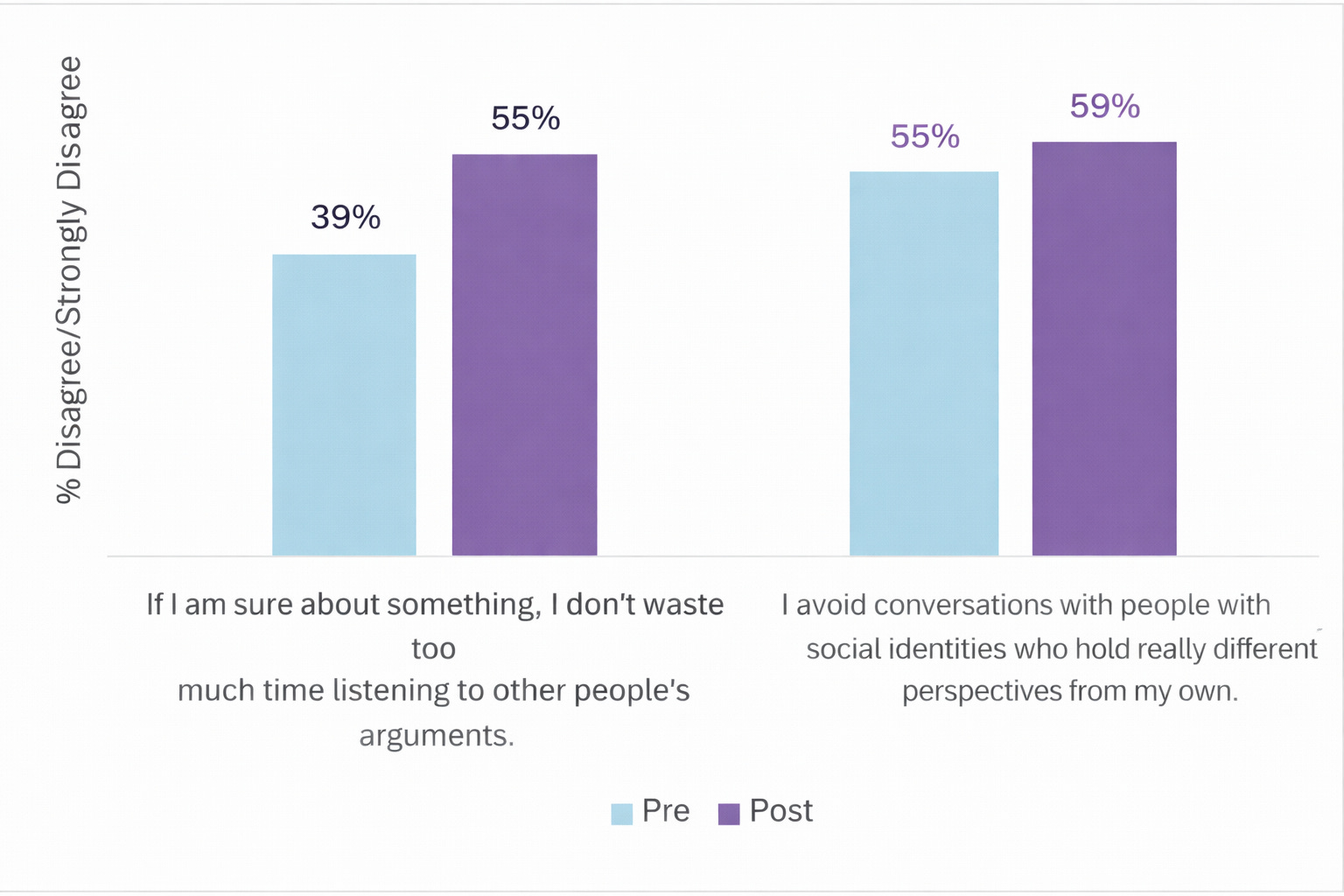
Prior to participating, only 39% of students disagreed with the statement:
“If I am sure about something, I don’t waste too much time listening to other people’s arguments.”
After participating, that number rose to 55% — a 16-point increase. In other words, On Discourse helped a significant share of students recognize the importance of listening to new ideas and arguments, even when those ideas challenge their firmly held beliefs.
The program also made students more willing to engage with people who hold different social identities and perspectives. After participating, 59% of students (up from 55%) disagreed with the statement:
“I avoid conversations with people with other social identities who hold really different perspectives from my own.”
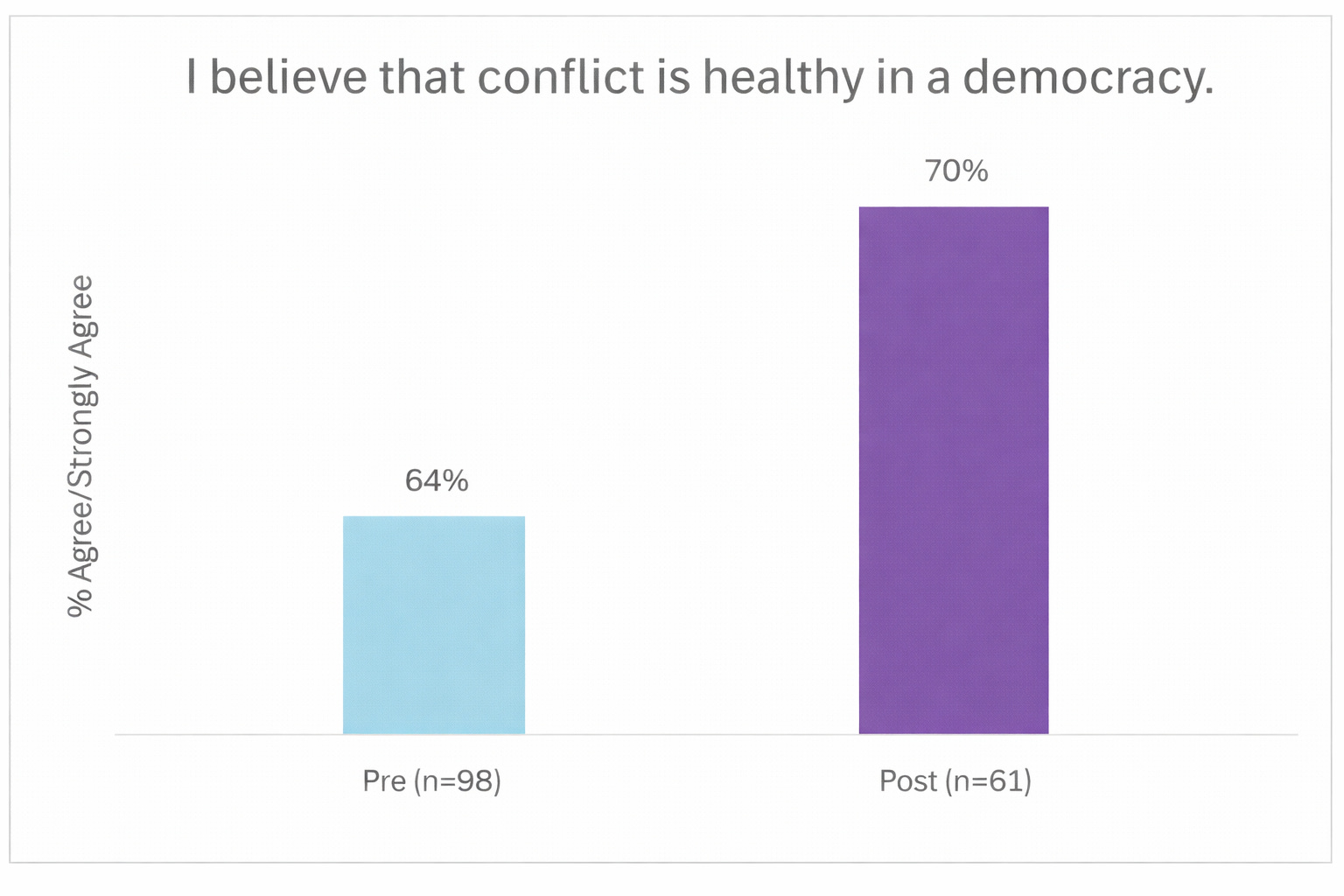
In addition to the teach-ins and other CLPs, some students also enrolled in new “discourse-based” courses, including the class on Civil Discourse discussed by Dr. Liz Smith in our latest Paladin Report.
These courses produced similarly positive results. Agreement with the statement “conflict is healthy in a democracy” increased by 6 percentage points among students who participated in the courses.
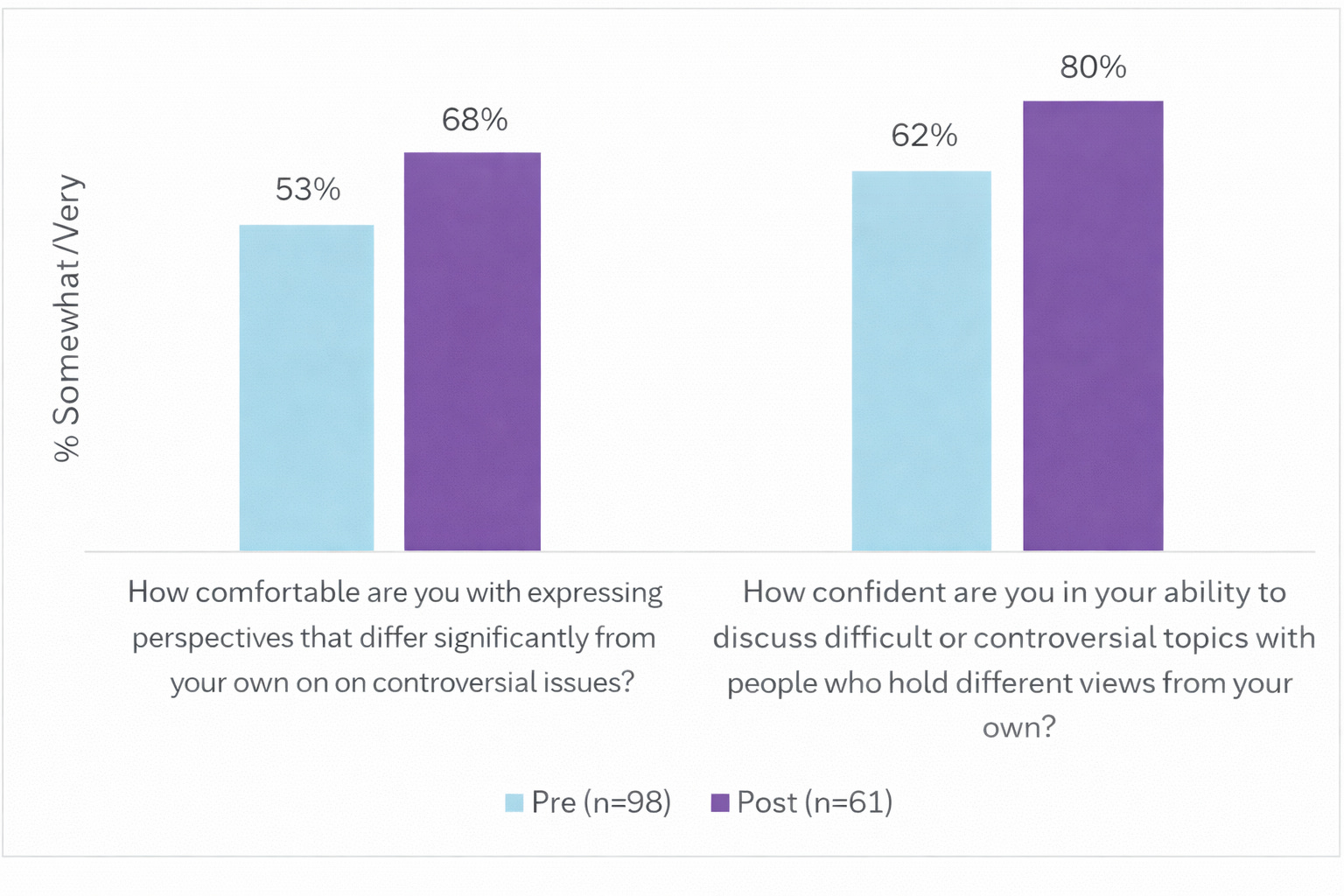
Students also reported substantial gains in their comfort and confidence discussing controversial issues. The share who felt somewhat or very comfortable expressing perspectives that differ significantly from their own rose from 53% to 68%.
Meanwhile, confidence in discussing difficult topics with people who hold opposing views jumped nearly 20 points, from 62% before the course to nearly 80% after.
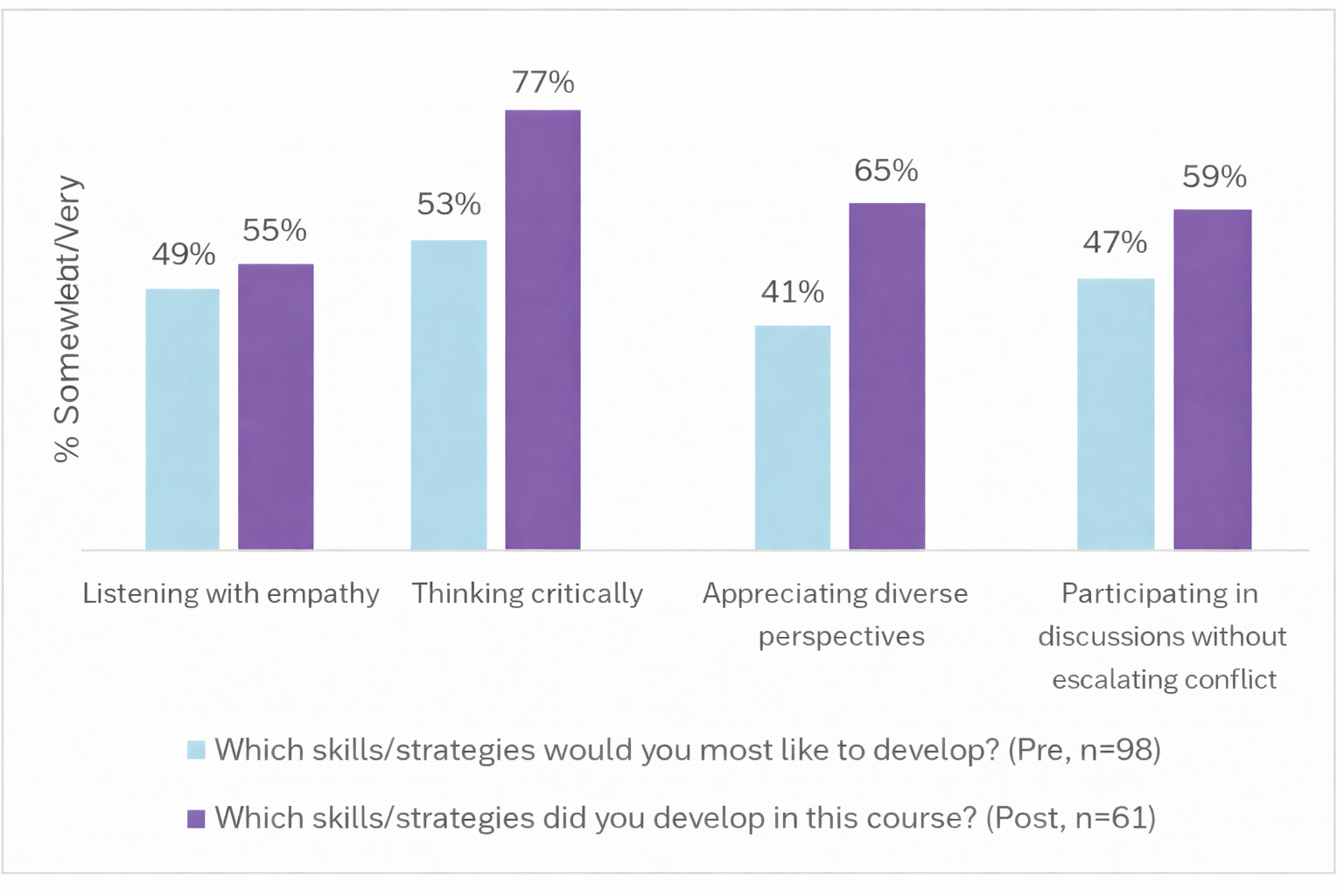
Finally, large majorities of students reported that these courses improved their ability to listen with empathy, think critically, appreciate diverse perspectives, and participate in discussions without escalating conflict.
All of this represents real progress.
Furman still has a long way to go in creating a truly healthy climate for free speech. Most critically, the university must address the lack of intellectual and political diversity among its faculty — an issue we highlighted in our latest letter to President Davis.
But for now, it is worth recognizing the good work already accomplished by the On Discourse program. We hope President Davis will continue to grow and expand this effort in 2026 and beyond.